NT$ 176,000
首頁 » 合成器 » 合成器音源 » Buchla Music Easel Modern 合成器音源
Buchla Music Easel (Modern)
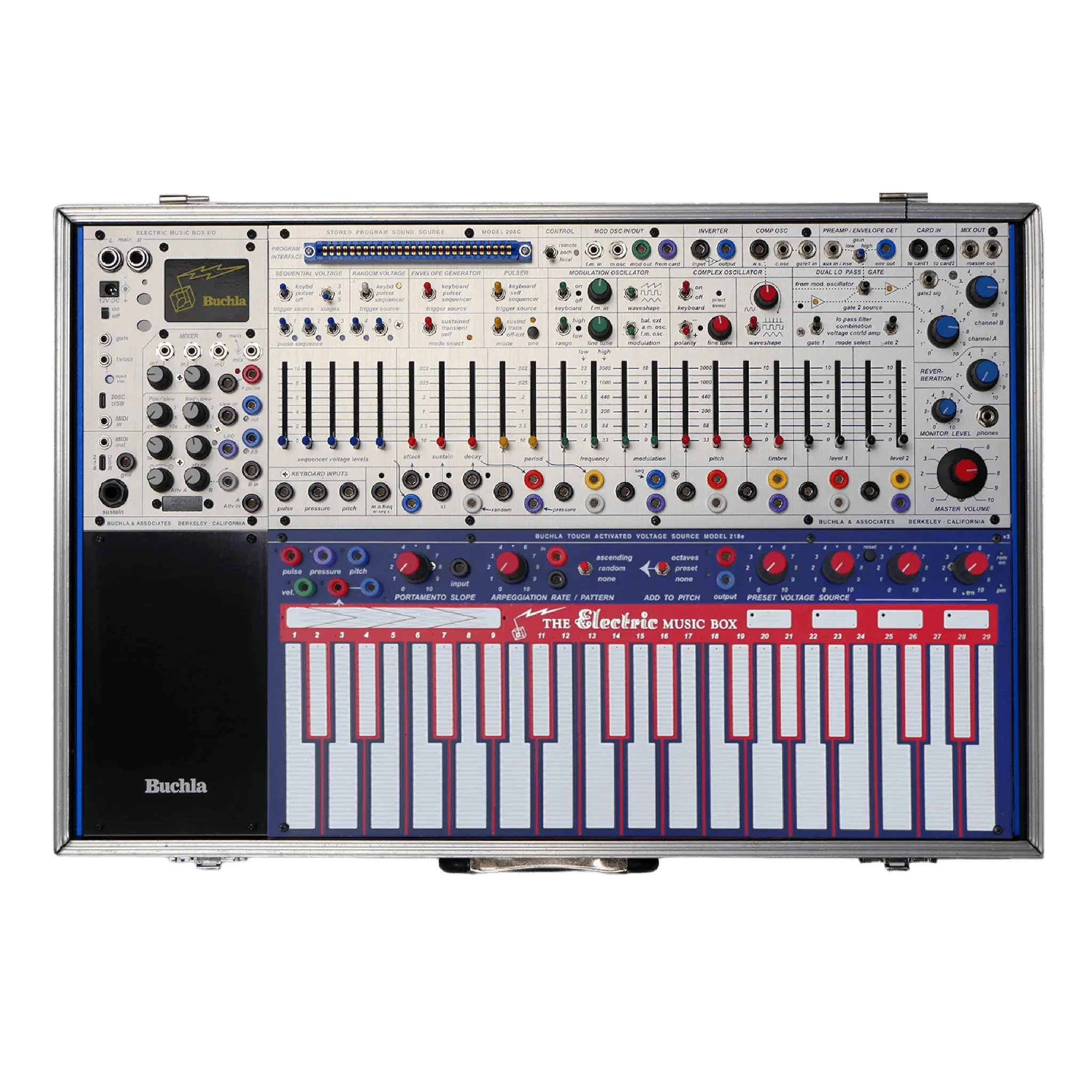
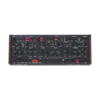
Buchla Music Easel (Modern) 是一款合成器音源。The Buchla Music Easel was one of the first truly portable electronic music instruments. Fifty years ago, in 1973, only a few dozen were made. Unlike many iconic technologies, the influence was not grown through force of scale, but rather the force of the ideas. The Music Easel made available virtually every musical dimension: timbre, melody, rhythm, and time; how these dimensions intersected was no longer the court of acoustics and material, but signals and voltage. The 208 Stored Program Sound Source engendered “a new functional organization [with a] particularly rapid system of patching and program storage via plug-in cards.”
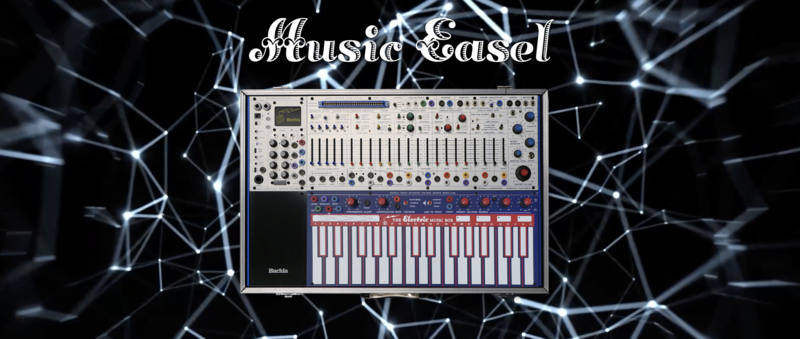
Taking cues from the then-recent discipline of cybernetics, the 218 touch plate was for “real-time communication” to help realize the “potential vocabulary” of the Easel, rather than exploiting existing modes of musical virtuosity. The Stored Program Cards ensured rapid repeatability and repertoire on its own terms. The battery terminals made sure the music was as portable as any acoustic instrument. And the name let you know it was designed for art rather than science.
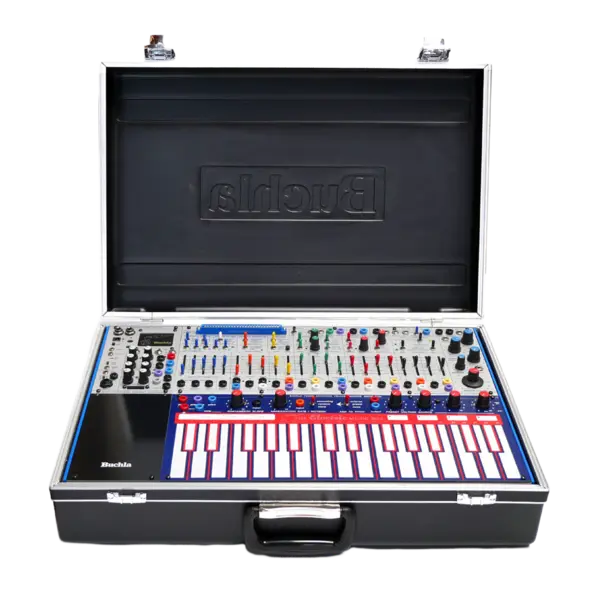
Buchla is ecstatic to revive the Music Easel for its third run in 50 years. We first released the updated 208 Stored Program Sound Source, dubbed the Easel Command, with expanded MIDI and USB capability. Next came the update of the Easel Program Manager – a complete kit for storing and recalling sounds sources, even more rapidly than imagined in 1973. Our new 218 Touch Activated Voltage Source provides the optimal input facility, as originally envisioned. We can now bring it all together in a rugged case and the advanced EMBIO module that unifies all the audio and control inputs and outputs for integration with the rest of your musical world.
More than a retro novelty, the Music Easel still speaks to a future we strive for. A technology that invites conversation, not chats, and controls that engage expression, not work. There are many new worlds to explore in this instrument created at the crossroads of the jazz and computer ages. Designed as “an integrated assemblage of functions“, rather than a collection of modules, the Music Easel’s color coding, comfortable access to controls, and solid patch connections allow for satisfying sessions of sonic discovery.
Stored Program Sound Source Model 208C
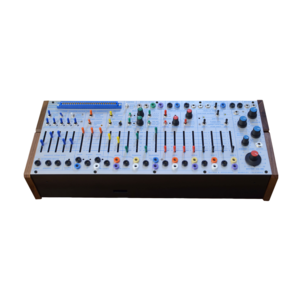
The sound source of the Music Easel is the 208C, which includes a complex oscillator and a modulation oscillator (which can also serve as another voice), each with independent switchable waveforms, as well as a noise generator, allowing for rich and intricate sound design. The 208C also features a five-stage sequencer, envelope generator, pulser and modulation source – with switchable triggers – allowing for complex patterns and evolving textures. The dual low pass gate provides dynamic control over the tone and amplitude of the sound, as well as natural-sounding decay and sustain. The 208C has a number of modulation sources, including a random voltage generator, the envelope generator, modulation oscillator, and an envelope detector. These sources can be used to modulate various parameters via the extensive patchfield – creating movement, texture, and complexity. The 208C also includes a mixer section with spring reverb.
Touch Activated Voltage Source Model 218e (v3)
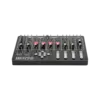
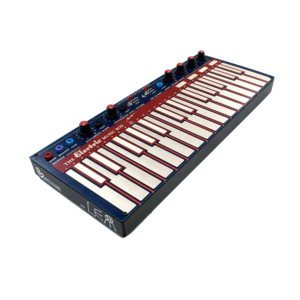
The first design appeared in the 1973 release of the Buchla Music Easel and named for the spacecraft that delivered astronauts to the moon. Providing the familiar piano key layout for this early mobile music machine, the additional controls and capabilities were an interface for exploring uncharted musical territory. With the new version 3, it’s been elevated with a new foundation of stable, modern electronics with incredible sensitivity and and accuracy – the lightest touch will produce triggers and control voltages. The adjustable sensor has the dynamic range and durability to handle your playing. The new texture not only improves the sensing, but provides a satisfying tactile experience. As always, pressure is an expressive output, adding an extra dimension to the control. MIDI outputs velocity and polyphony, as well as channel pressure, making the 218e a uniquely expressive controller. The 218e includes portamento and an arpeggiator, which can be driven by external inputs and are allowed to interact with the automated notes to make patterns more complex. Additional controls allow you to blend different patterns and randomness to easily change from the expected to the surprising. The classic preset voltage knobs offer several possible ways to shift your sounds into new territory. Not only can the knobs be used for quick access to voltages for your patch, they can control arpeggiation modes and octave shifting. Pads output pulses for additional control. The 218e also gives you a unique interface to playing your existing MIDI gear and soft synths. Each touch outputs note name, channel pressure, and velocity for every note, along with sustain controls from a pedal. Polyphonic MIDI mode lets you play chords. The touchstrip can act as a pitch bend control, or as a mod wheel for additional expressive control. Easily configured using the front panel controls, you can send notes and controls on any MIDI channel.
Electric Music Box Input/Output (EMBIO)
Maintaining the spirit, sound, and process from the original, the new Music Easel adds a variety of new features. Buchla’s latest renditions of the Stored Program Sound Source and Touch Activated Voltage Source are tied together with the Electric Music Box Input/Output (EMBIO) module. This of course provides MIDI out (mini jack and USB) and CV out from the 218, MIDI in to the 208, and the audio out from the 208C. Additional creative control comes from the Audio Mixer, for integration with other Buchla modules and systems, and the CV conditioners and controls. The slew control can turn your sequencer into a wavy modulator, or soften up a square LFO. The attenuator and crossfader gives you the opportunity to find new levels and combinations of voltages from existing ones. The pulse converter offers new rhythms to trigger. And a simple LFO provides another valuable modulator when you just can’t quite let yourself flip that Mod Osc switch from “high” to “low.”
商品規格
- 音源模組
- Stored Program Sound Source Model 208C
- 觸控電壓源模組
- Touch Activated Voltage Source Model 218e (v3)
- 輸入/輸出模組
- Electric Music Box Input/Output (EMBIO)
- 序列器
- five-stage sequencer



使用評論:
購物須知 Q&A
Q1. 運費怎麼計算?有免運嗎?
購物滿 NT$3,000 免運費,未滿 NT$3,000 運費為 NT$120。選擇「門市自取」則不收運費。
Q2. 有哪些付款方式?
我們提供:信用卡(一次付清、3 期、6 期分期)、銀行匯款、超商代碼繳費、貨到付款、到店付款,以及 AFTEE 先享後付。分期付款目前僅提供中國信託、玉山銀行、台新銀行發行之信用卡。軟體商品與金額超過 NT$10,000 之訂單無法使用貨到付款。
發票已全面採用電子發票,將自動寄送至您註冊的 Email。個人(二聯式)發票一經開立,無法更改或改開公司戶(三聯式)發票。
Q3. 如何門市取貨?
結帳時選擇「門市自取」(免運費),商品備妥後我們會以 Email 通知您,請攜帶訂單資訊前往門市取貨。
門市地址:台北市中正區羅斯福路三段 244 巷 2 弄 2-1 號 2 樓,營業時間:週一至週六 11:00 – 18:30(週日公休)。
Q4. 何謂鑑賞期?
依消費者保護法之規定,網路購物享有商品到貨日起算七天猶豫期。必須提醒您,「 猶豫期並非試用期 」,鑑賞期目的為提供您檢視、參考,並非提供您商品的試用,若您收到商品經檢視後有任何不合意之處,請勿拆封使用,並立即依照退貨規定辦理退貨。商品退換貨必須是完整包裝,且勿缺漏各項配件及贈品,或自行拆損原廠包裝與外盒。若有任何遺失、損毀或是缺件,可能會影響到您的退換貨權益,也可能依照損毀狀況扣除復原之相關費用。
Q5. 如何辦理退換貨?
若您確定要辦理退貨,請務必保持商品全新完整包裝,且勿損毀原廠外盒。包含商品本體、配件、保證書、原廠包裝、附隨說明文件等,均須包含在內,勿缺漏任何一項。若有其他可歸責您的原因,造成商品損毀,將無法辦理退貨,或須將損壞費用於退款中扣抵。但商品如有新品瑕疵問題,則不在此限,享有無條件退換貨服務。
請於鑑賞期內來電或來信,詳細告知我們欲退換貨之原因、商品現況、電話,及取件的地址,我們將於 3 - 5 個工作天內安排退貨事宜。
Q6. 如何收到退款、需要多少時間?
依不同付款方式,退款方式與時間也不同,說明如下:
信用卡付款:待我們收到退貨商品後約 5 至 7 個工作天,款項將會退至您信用卡帳戶。請依信用卡結帳日判斷,刷退款項可能列於本月或次月帳單,退款進程請向信用卡發卡銀行確認。
匯款:請聯絡 service [at] digilog.tw 並提供您的完整匯款資料(銀行、分行名稱、銀行代號、戶名、帳號),我們將派快遞公司前去取回您的退換貨商品,並於 5 至 7 個工作天,將款項匯還至您所指定的帳戶。
Q7. 商品有保固嗎?
商品享有 1 年保固。保固期內如需維修,請來信 service [at] digilog.tw 或來電 02-23638171 與我們聯絡。
Q8. 商品維修的運費需要自行負擔嗎?
商品維修的往返運費須自行負擔。
合成器音源選購常見問題
同樣的合成引擎少了鍵盤,價格與體積都小一截,桌面可以疊放多台、用同一支 MIDI 鍵盤輪流控制。對已經有鍵盤的人來說,是擴充音色最有效率的方式。
鍵盤的 MIDI 輸出(USB 或 5-pin DIN)接到音源的 MIDI 輸入即可;多台音源可用 MIDI thru 串接或經 MIDI 分配器連接,各台設定不同的 MIDI channel 就能個別控制。
多數提供 6.3mm line 輸出,接混音器或錄音介面的 line in 即可;同時使用多台時,用一台小型混音器把各音源匯流到監聽與錄音,是最常見的桌面配置。
合成器選購常見問題
類比合成器以實體電路產生與處理聲音,音色常被形容為溫暖、有機,但同價位下複音數較少;數位合成器彈性大、複音數多,常見 wavetable、FM 等合成方式,許多機種還能存大量音色。兩者沒有絕對優劣,取決於想要的聲音與工作流程。
先確定三件事:預算、需不需要內建鍵盤(桌面音源模組較省空間與預算)、想做的音樂類型。想學減法合成原理,介面上旋鈕對應清楚(一鍵一功能)的機種比選單式操作更容易上手。
單音合成器一次只能發出一個音,適合 bass line 與 lead 旋律,經典類比 bass 合成器多為單音設計;複音合成器可同時發多個音,能彈奏和弦與鋪底音色。想彈和聲進行就需要複音機種。
從諧波豐富的波形(鋸齒波、方波)出發,用濾波器削去不要的頻率,再以 envelope 與 LFO 塑形音量與音色變化——這是最多合成器採用、也最適合入門理解的合成方式。學會減法合成的訊號流,之後操作其他合成架構都會更快上手。
同一引擎的桌上型版本省空間也省預算,已經有 MIDI 鍵盤的人可以用一支鍵盤控制多台音源;鍵盤版則適合需要現場演奏、或不想多接一層 MIDI 的使用者。工作桌空間和演出型態是主要考量。
Buchla其他商品:
-5%
-9%
-11%
-11%
你可能會有興趣的商品:
-27%
-5%
-4%

目前尚無評論