NT$ 176,000
Home » Synthesizer » Synthesizer Module » Buchla Music Easel Modern 合成器音源
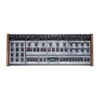
Buchla Music Easel (Modern)
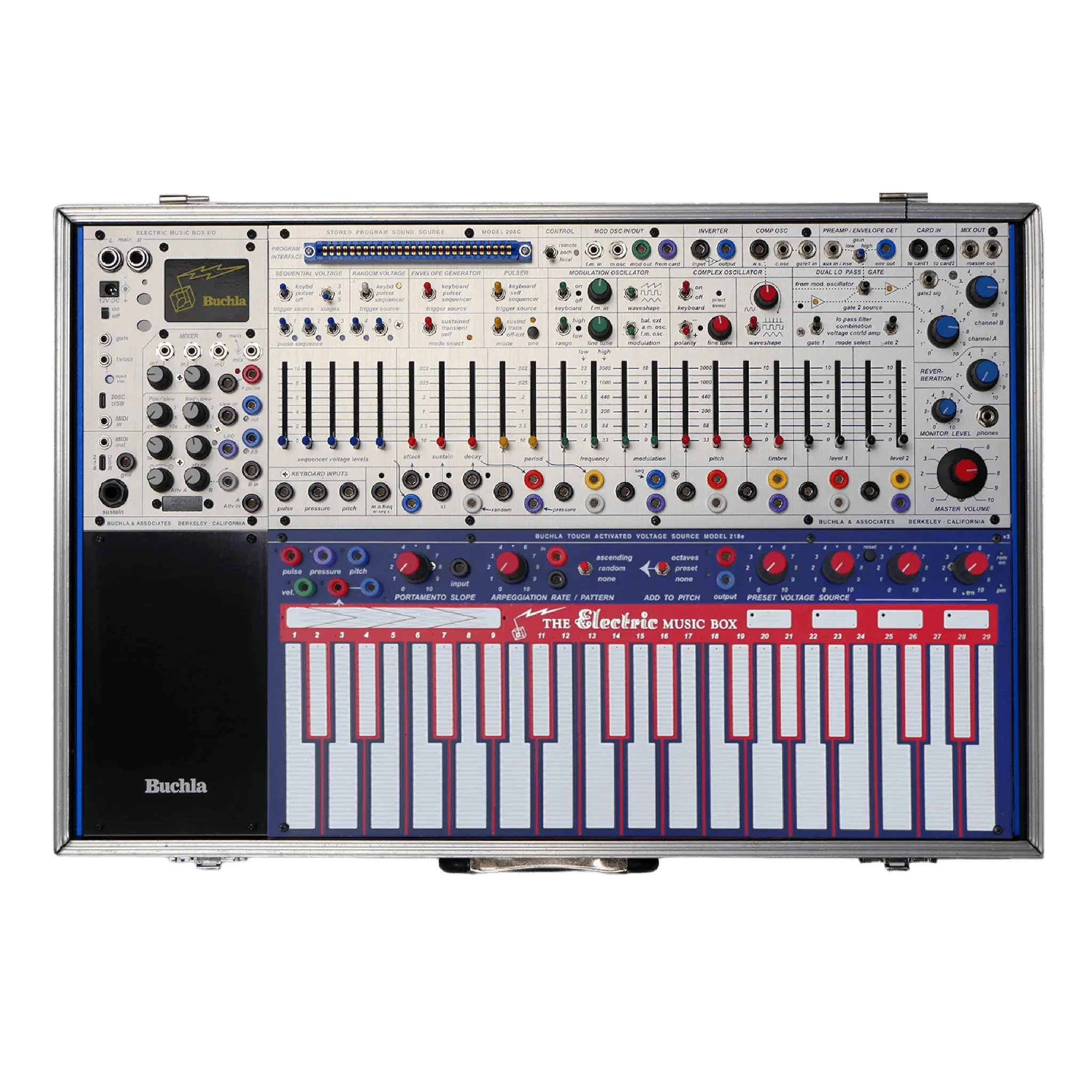
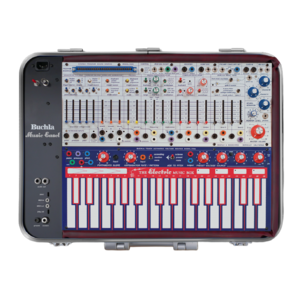
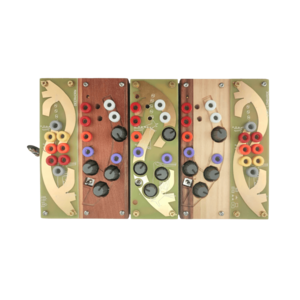
Buchla Music Easel (Modern) 是一款合成器音源。The Buchla Music Easel was one of the first truly portable electronic music instruments. Fifty years ago, in 1973, only a few dozen were made. Unlike many iconic technologies, the influence was not grown through force of scale, but rather the force of the ideas. The Music Easel made available virtually every musical dimension: timbre, melody, rhythm, and time; how these dimensions intersected was no longer the court of acoustics and material, but signals and voltage. The 208 Stored Program Sound Source engendered “a new functional organization [with a] particularly rapid system of patching and program storage via plug-in cards.”
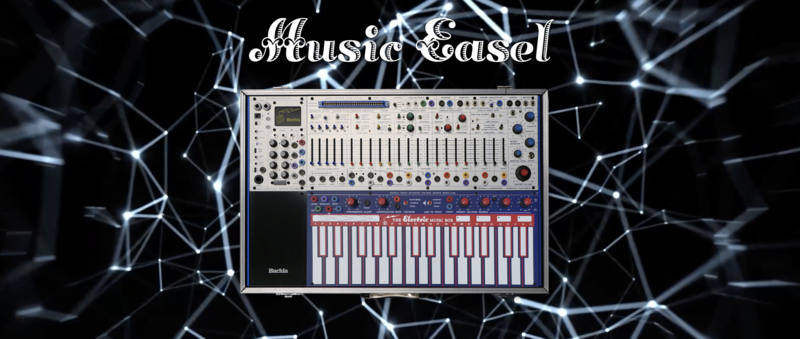
Taking cues from the then-recent discipline of cybernetics, the 218 touch plate was for “real-time communication” to help realize the “potential vocabulary” of the Easel, rather than exploiting existing modes of musical virtuosity. The Stored Program Cards ensured rapid repeatability and repertoire on its own terms. The battery terminals made sure the music was as portable as any acoustic instrument. And the name let you know it was designed for art rather than science.
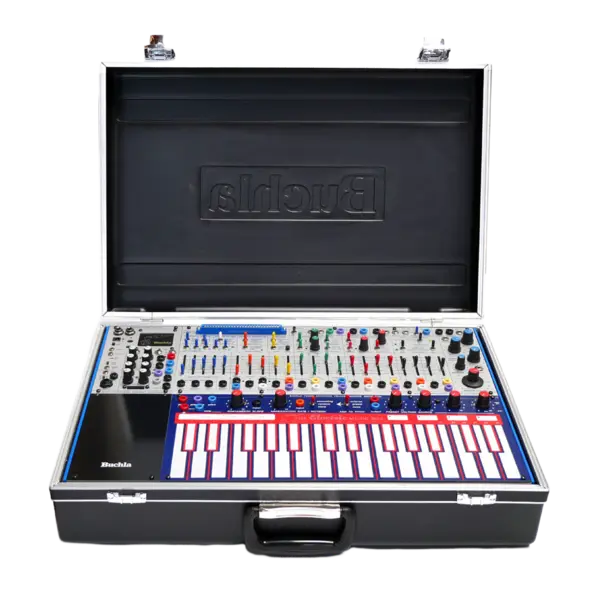
Buchla is ecstatic to revive the Music Easel for its third run in 50 years. We first released the updated 208 Stored Program Sound Source, dubbed the Easel Command, with expanded MIDI and USB capability. Next came the update of the Easel Program Manager – a complete kit for storing and recalling sounds sources, even more rapidly than imagined in 1973. Our new 218 Touch Activated Voltage Source provides the optimal input facility, as originally envisioned. We can now bring it all together in a rugged case and the advanced EMBIO module that unifies all the audio and control inputs and outputs for integration with the rest of your musical world.
More than a retro novelty, the Music Easel still speaks to a future we strive for. A technology that invites conversation, not chats, and controls that engage expression, not work. There are many new worlds to explore in this instrument created at the crossroads of the jazz and computer ages. Designed as “an integrated assemblage of functions“, rather than a collection of modules, the Music Easel’s color coding, comfortable access to controls, and solid patch connections allow for satisfying sessions of sonic discovery.
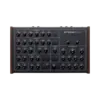
Stored Program Sound Source Model 208C
The sound source of the Music Easel is the 208C, which includes a complex oscillator and a modulation oscillator (which can also serve as another voice), each with independent switchable waveforms, as well as a noise generator, allowing for rich and intricate sound design. The 208C also features a five-stage sequencer, envelope generator, pulser and modulation source – with switchable triggers – allowing for complex patterns and evolving textures. The dual low pass gate provides dynamic control over the tone and amplitude of the sound, as well as natural-sounding decay and sustain. The 208C has a number of modulation sources, including a random voltage generator, the envelope generator, modulation oscillator, and an envelope detector. These sources can be used to modulate various parameters via the extensive patchfield – creating movement, texture, and complexity. The 208C also includes a mixer section with spring reverb.
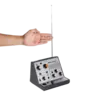
Touch Activated Voltage Source Model 218e (v3)
The first design appeared in the 1973 release of the Buchla Music Easel and named for the spacecraft that delivered astronauts to the moon. Providing the familiar piano key layout for this early mobile music machine, the additional controls and capabilities were an interface for exploring uncharted musical territory. With the new version 3, it’s been elevated with a new foundation of stable, modern electronics with incredible sensitivity and and accuracy – the lightest touch will produce triggers and control voltages. The adjustable sensor has the dynamic range and durability to handle your playing. The new texture not only improves the sensing, but provides a satisfying tactile experience. As always, pressure is an expressive output, adding an extra dimension to the control. MIDI outputs velocity and polyphony, as well as channel pressure, making the 218e a uniquely expressive controller. The 218e includes portamento and an arpeggiator, which can be driven by external inputs and are allowed to interact with the automated notes to make patterns more complex. Additional controls allow you to blend different patterns and randomness to easily change from the expected to the surprising. The classic preset voltage knobs offer several possible ways to shift your sounds into new territory. Not only can the knobs be used for quick access to voltages for your patch, they can control arpeggiation modes and octave shifting. Pads output pulses for additional control. The 218e also gives you a unique interface to playing your existing MIDI gear and soft synths. Each touch outputs note name, channel pressure, and velocity for every note, along with sustain controls from a pedal. Polyphonic MIDI mode lets you play chords. The touchstrip can act as a pitch bend control, or as a mod wheel for additional expressive control. Easily configured using the front panel controls, you can send notes and controls on any MIDI channel.
Electric Music Box Input/Output (EMBIO)
Maintaining the spirit, sound, and process from the original, the new Music Easel adds a variety of new features. Buchla’s latest renditions of the Stored Program Sound Source and Touch Activated Voltage Source are tied together with the Electric Music Box Input/Output (EMBIO) module. This of course provides MIDI out (mini jack and USB) and CV out from the 218, MIDI in to the 208, and the audio out from the 208C. Additional creative control comes from the Audio Mixer, for integration with other Buchla modules and systems, and the CV conditioners and controls. The slew control can turn your sequencer into a wavy modulator, or soften up a square LFO. The attenuator and crossfader gives you the opportunity to find new levels and combinations of voltages from existing ones. The pulse converter offers new rhythms to trigger. And a simple LFO provides another valuable modulator when you just can’t quite let yourself flip that Mod Osc switch from “high” to “low.”
商品規格
- 音源模組
- Stored Program Sound Source Model 208C
- 觸控電壓源模組
- Touch Activated Voltage Source Model 218e (v3)
- 輸入/輸出模組
- Electric Music Box Input/Output (EMBIO)
- 序列器
- five-stage sequencer


Reviews:
Purchase FAQ
Q1. How is shipping calculated? Is there free shipping?
Orders over NT$3,000 qualify for free shipping. Orders under NT$3,000 incur a NT$120 shipping fee. In-store pickup is always free.
Q2. What payment methods are available?
We accept: credit card (single payment, or 3/6-month installments), bank transfer, convenience store payment code, cash on delivery, in-store payment, and AFTEE deferred payment. Installments are currently available only for credit cards issued by CTBC Bank, E.SUN Bank, and Taishin Bank. Cash on delivery is not available for software products or orders over NT$10,000.
E-invoices are issued for all purchases and sent automatically to your registered email. Once a personal (duplicate) invoice is issued, it cannot be changed or reissued as a company (triplicate) invoice.
Q3. How does in-store pickup work?
Select "In-store pickup" (free) at checkout. We will notify you by email once your items are ready. Please bring your order information to the store.
Store address: 2F., No. 2-1, Aly. 2, Ln. 244, Sec. 3, Roosevelt Rd., Zhongzheng Dist., Taipei City. Opening hours: Monday to Saturday 11:00 – 18:30 (closed on Sundays).
Q4. What is the inspection period?
According to the Consumer Protection Act, online purchases come with a 7-day inspection period starting from the delivery date. Please note that the "inspection period is not a trial period." The purpose is for you to inspect and review the product, not to use it. If you are unsatisfied after inspection, please do not open or use the product and follow the return procedures immediately. Returned products must be in complete packaging with all accessories, gifts, and original packaging intact. Any missing, damaged, or incomplete items may affect your return rights and restoration costs may be deducted.
Q5. How do I process a return or exchange?
If you wish to return a product, please ensure it is in complete, new condition with the original packaging undamaged. This includes the product itself, accessories, warranty card, original packaging, and all accompanying documents. If the product is damaged due to reasons attributable to you, we may not be able to process the return, or repair costs may be deducted from the refund. However, products with manufacturing defects are exempt and qualify for unconditional return or exchange.
Please contact us by phone or email within the inspection period, providing the reason for the return/exchange, current product condition, phone number, and pickup address. We will arrange the return within 3-5 business days.
Q6. How will I receive my refund, and how long does it take?
Refund methods and timelines vary by payment method:
Credit Card: After we receive the returned product, the refund will be credited to your credit card account within approximately 5-7 business days. Depending on your billing cycle, the refund may appear on your current or next statement. Please confirm with your credit card issuing bank.
Bank Transfer: Please contact service [at] digilog.tw with your complete bank details (bank name, branch name, bank code, account holder name, account number). We will arrange courier pickup of the returned product and transfer the refund to your designated account within 5-7 business days.
Q7. Is there a warranty on products?
Products come with a 1-year warranty. For repairs during the warranty period, please contact service [at] digilog.tw or call +886-2-23638171.
Q8. Do I need to pay for shipping when sending products for repair?
Round-trip shipping costs for product repairs are the customer's responsibility.
Buchla Others:
-5%
-9%
-11%
-11%
You may be interested in:
-11%
-10%
-2%

目前尚無評論